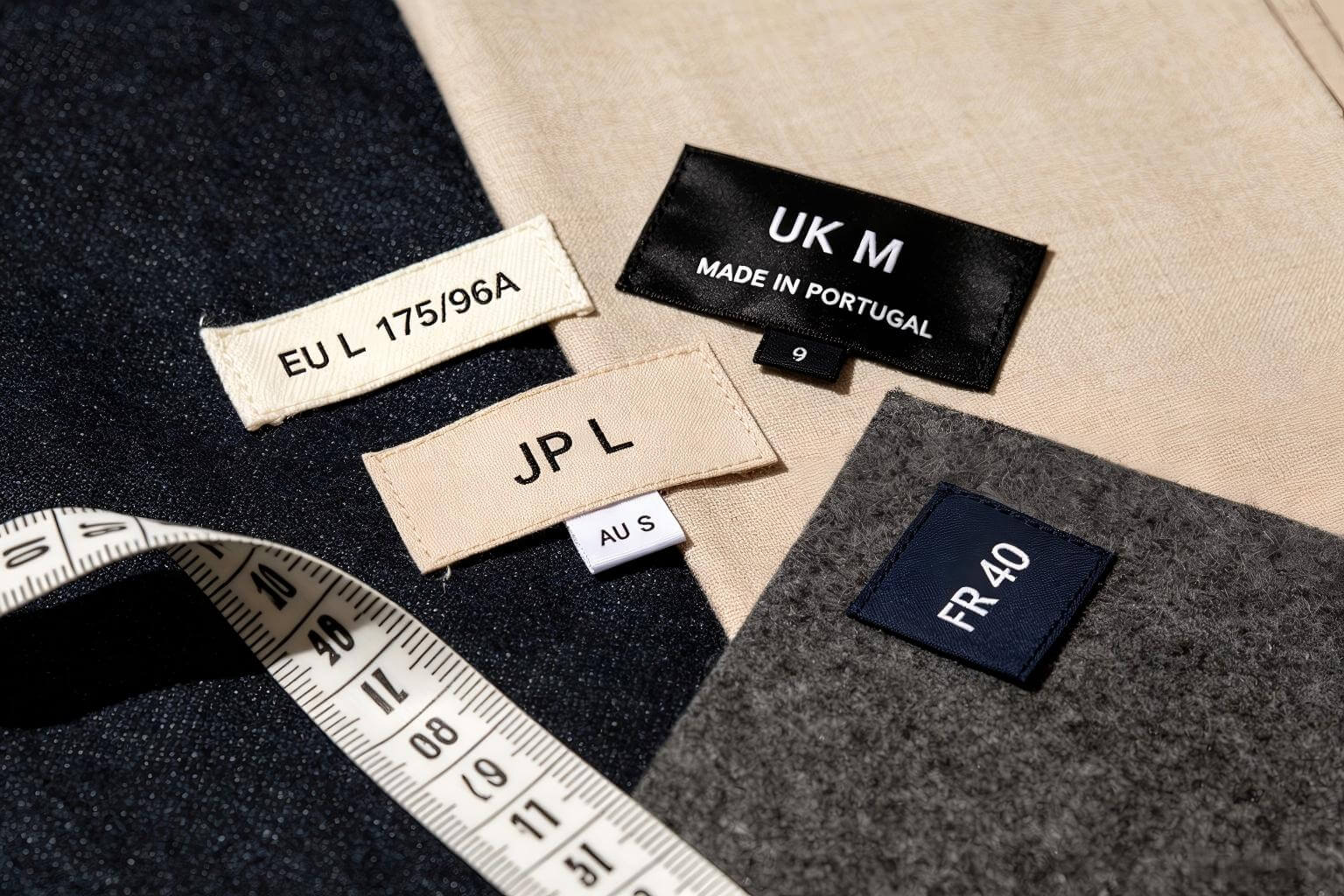
Many people shopping or sourcing across borders instinctively place orders using the letter sizes theyre familiar withwearing M in Asia, they select M for US purchases as well. What often follows, however, is the awkward reality of sleeves that are too long, waistlines that are too loose, and shoulder seams that slip halfway down the arms.
This isnt because any sizing system is inaccurateits because US sizing is built on body measurement data from Western populations, while Asian sizing uses Asian body types as its reference.
The two systems differ systematically in core dimensions like chest, waist, and shoulder width. To complicate matters further, Asia itself has multiple sizing systemsChinas numerical notation (e.g., 160/84A), Japans odd-number system (5, 7, 9, 11), and Koreas numbered scale (44, 55, 66, 77)each requiring its own unique conversion to US sizes rather than a simple one-size-fits-all formula.
Why Are Asian and US Clothing Sizes Different?
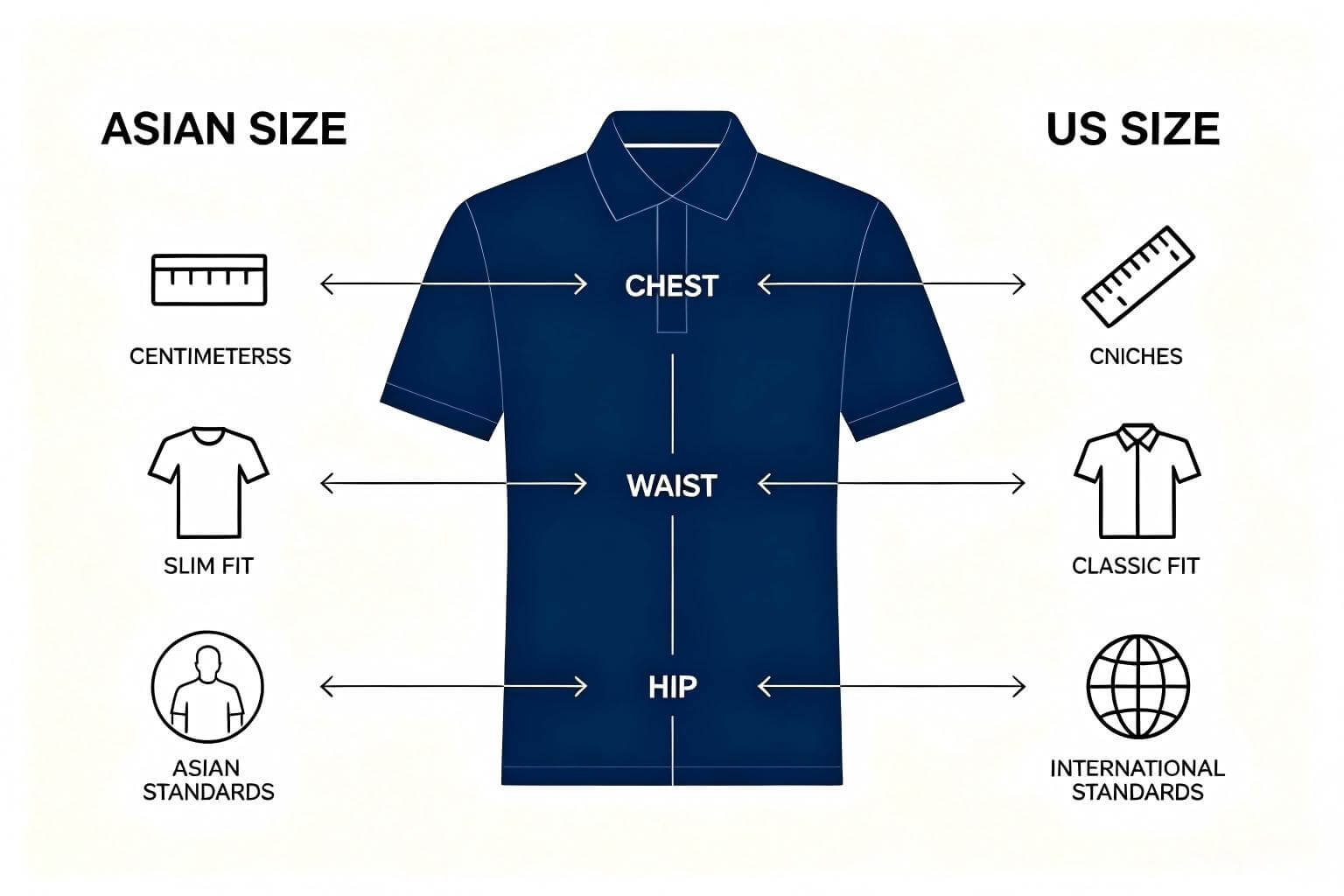
This question ultimately comes down to the underlying body measurement data of different markets. US sizing is based on average height, weight, and body fat distribution of Western populations, while Asian sizing references Asian body types. Simply put, a M in Asian sizing will typically have a chest and waist that are a few centimeters smaller.
For women's clothing, for example, China's S (160/84A) corresponds to a bust measurement of approximately 82–86 cm, while the US S (size 4) may have a bust range of 86–89 cm. This isn't about one system being "wrong", it's that the two markets use different fit standards.
Moreover, Asian sizing standards aren't uniform internally. China uses a numerical notation (e.g., 160/84A, indicating height and bust measurement), Japan uses odd numbers (5, 7, 9, 11), and Korea commonly employs a numbered system like 44, 55, 66, 77. Each system requires its own conversion mapping to US sizes, you can't simply apply a single formula across the board.
What Is a Quick Reference Chart for Asian vs. US Sizes?
If you need a basic starting framework, here is a simplified reference:
| Asian Size (China/Japan/Korea) | US Size (Women's) | US Size (Men's Tops) |
|---|---|---|
| XS (155/80A / JP 5 / KR 44) | 0–2 | 34–36 |
| S (160/84A / JP 7 / KR 55) | 4–6 | 36–38 |
| M (165/88A / JP 9 / KR 66) | 8–10 | 38–40 |
| L (170/92A / JP 11 / KR 77) | 12–14 | 42 |
| XL (175/96A / JP 13 / KR 88) | 14–16 | 44 |
This chart should only serve as an initial screening tool. Accurate conversion always requires specific body measurements.
What Do Asian Small, Medium, and Large Correspond to in US Sizing?
In practice, I think of Asian S/M/L as a "shifted" scale relative to US sizes. Asian S typically corresponds to US XS or size 0–2; Asian M maps to US 4–6; and Asian L roughly equals US 8–10. The core reason is that the chest, waist, and hip measurements of Asian sizing are generally one full grade smaller than US sizes with the same letter label. If you assume "I wear M in Asia, so I'll buy M in the US," you'll most likely end up with a garment that's too big.
How Do You Convert Asian Women's Sizes to US Sizes?
Women's conversion is more complex because it involves three dimensions: bust, waist, and hip. A proven reference is: China's 160/84A (S) corresponds to US size 4, with a bust range of 82–86 cm; China's 165/88A (M) maps to US 6–8; and China's 170/92A (L) corresponds to US 10–12. For Japanese sizes, JP 7 roughly equals US XS (0–2), JP 9 equals US S (4–6), and JP 11 equals US M (8–10). In Korean sizing, 55 roughly corresponds to US S, 66 to US M, and 77 to US L.
Asian Women's Tops Size Chart
| China Size | US Size | Japan Size | Korea Size |
|---|---|---|---|
| 160/84A (S) | 4–6 | 7–9 | 55 |
| 165/88A (M) | 8–10 | 9–11 | 66 |
| 170/92A (L) | 10–12 | 11–13 | 77 |
| 175/96A (XL) | 12–14 | 13–15 | 88 |
| 180/100A (XXL) | 14–16 | 15–17 | 99 |
However, this is based solely on bust measurement. If a dress has a fitted waist, the waist measurement becomes more critical; for a bodycon dress, hip measurement may also be the deciding factor.
How Do You Convert Asian Men's Sizes to US Sizes?
The conversion logic for men's tops is consistent with women's: Asian sizing runs about one size smaller overall. China's 170/92A (M) roughly corresponds to US size 38 or the S–M transition zone; 175/96A (L) maps to US size 40; and 180/100A (XL) corresponds to US size 42. Men's pants conversion is more straightforward because waist sizes are typically given in inches. An Asian-labeled "34" pant may have an actual waist closer to a US 32-inch fit, depending on whether the brand uses actual waist measurement or a "comfort-fit" eased waist.
Asian Men's Tops Size Chart
| Asian Size (Common) | US Size | Reference Chest (cm) | Reference Height (cm) |
|---|---|---|---|
| S | XS | 80–88 | 155–165 |
| M | S | 88–96 | 165–175 |
| L | M | 96–102 | 175–185 |
| XL | L | 102–109 | 175–185 |
| XXL | XL | 109–120 | 175–185 |
How Do You Convert Asian Shirt Sizes to US Sizes?
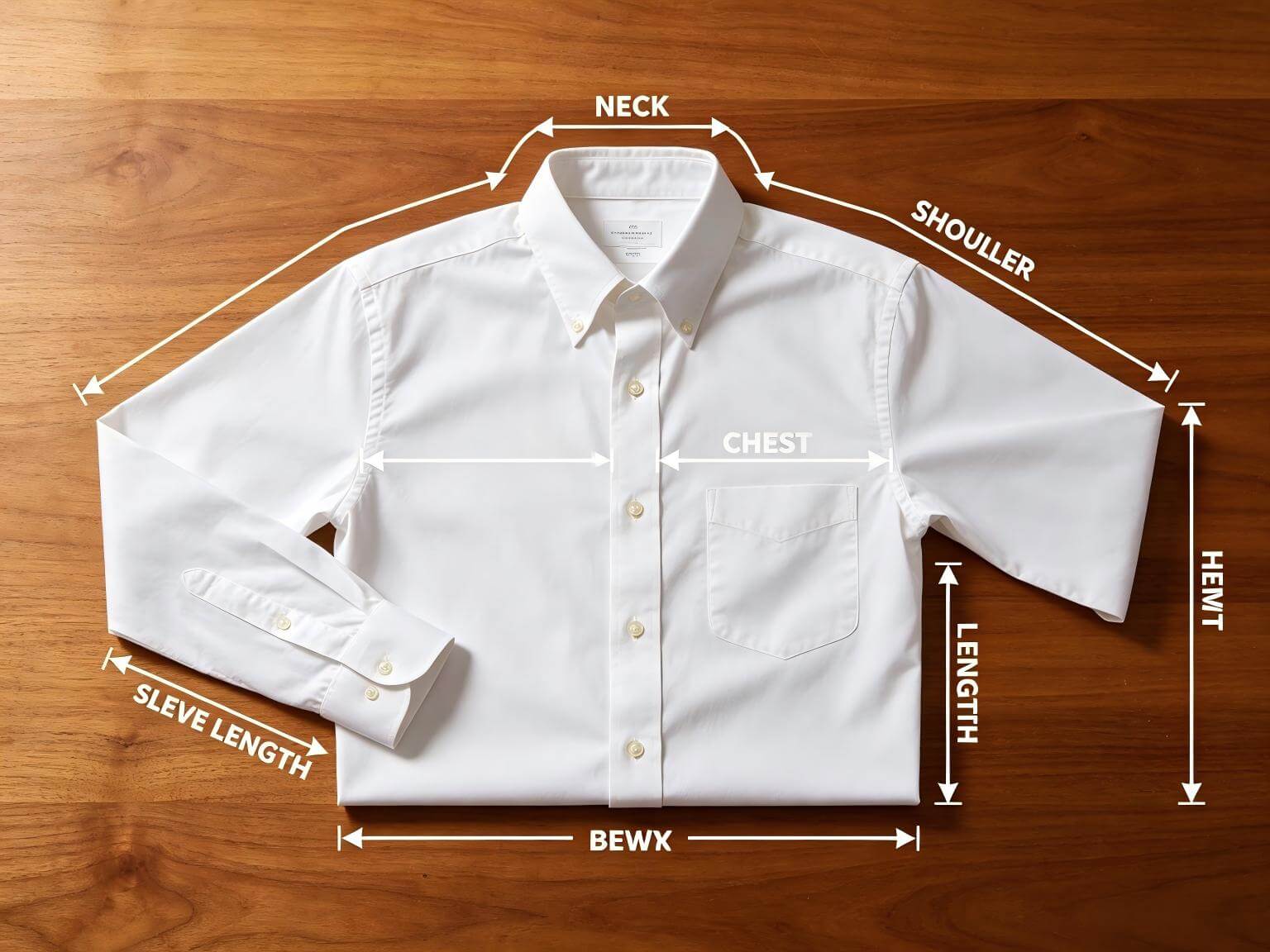
Shirt conversion primarily depends on neck circumference and chest measurement. An Asian M (chest approx. 88–92 cm) typically corresponds to a US 14.5-inch neck size with a chest of about 34–35 inches, roughly a US S. If the shirt has a slim fit, this discrepancy becomes even more pronounced. Additionally, Asian shirts generally have shoulder widths 1–2 cm narrower than their US counterparts of the same nominal size, one of the most overlooked but comfort-impacting differences between the two fit systems.
Men's Shirt Size Conversion Chart
| Asian Size (Asia/China) | US Size | Neck (inches) | Reference Height/Chest |
|---|---|---|---|
| S | XS | 14–14.5" | 165/84A – 170/88A |
| M | S | 15–15.5" | 170/88A – 175/92A |
| L | M | 16–16.5" | 175/92A – 180/96A |
| XL | L | 17–17.5" | 180/100A – 185/104A |
| XXL | XL | 18–18.5" | 185/108A – 190/108A |
How Do You Convert Asian Pants and Jeans Sizes to US Sizes?
The main pitfall in pants conversion is that the "label meaning" differs. US jeans typically list waist size directly in inches (e.g., 30, 32), while Asian sizes may list waist in centimeters or use an "eased" standard size that doesn't match either directly. A practical reference: Asian-labeled "165/72A" pants (waist approx. 72 cm) correspond to about US 28–29 inches; "170/76A" maps to US 30 inches. The safest approach is always to check the actual waist in centimeters, convert to inches (1 inch ≈ 2.54 cm), and verify inseam and hip measurements.
| Asian Size | US Women | US Men | Waist Reference |
|---|---|---|---|
| XS | 0–2 | XS | 26–28" (66–71 cm) |
| S | 2–4 | S | 28–31" (71–79 cm) |
| M | 4–6 | S–M | 31–33.5" (79–85 cm) |
| L | 6–8 | M | 33.5–36" (85–91 cm) |
| XL | 8–12 | M–L | 36–38" (91–97 cm) |
| 2XL | 12–16 | L–XL | 38–41" (97–104 cm) |
How Do You Convert Chinese Sizes to US Sizes?
The core Chinese size identifier is the body-type notation, such as 160/84A. For women's tops: 155/80A corresponds to US 0–2; 160/84A maps to US 4; 165/88A equals US 6–8; and 170/92A corresponds to US 10–12. For men: 165/88A maps to US 34–36; 170/92A corresponds to US 38; and 175/96A equals US 40. The body type code A stands for standard build; if the label shows B or C, the same height/bust notation will have larger circumference measurements, so adjustments are needed accordingly.
| China Size | US Women | US Men |
|---|---|---|
| XS | XXS–XS | XXS |
| S | XS | XS–S |
| M | S | S–M |
| L | S–M | M |
| XL | M–L | M–L |
| 2XL | L–XL | L–XL |
| 3XL | XL–2XL | XL |
How Do Japanese and Korean Sizes Differ from US Sizes?
Japanese sizes typically use odd numbers (5, 7, 9, 11, 13); the larger the number, the larger the size. JP 7 roughly equals US women's XS (0–2), JP 9 equals US S (4–6), and JP 11 equals US M (8–10). Japanese men's sizes commonly use letter labels S, M, L, LL, XL, where JP M corresponds to US S, and JP L corresponds to US M.
Korean women's sizes commonly use a numbered system: 44, 55, 66, 77, 88, which originated from ready-to-wear standards in the 1960s. In this system, 55 roughly corresponds to US S, 66 to US M, and 77 to US L. One caveat: many Korean markets like Dongdaemun also sell "Free Size" items, which typically fall between S and M and may run small for US body types.
What Measurements Should You Check Before Choosing an Asian Size?
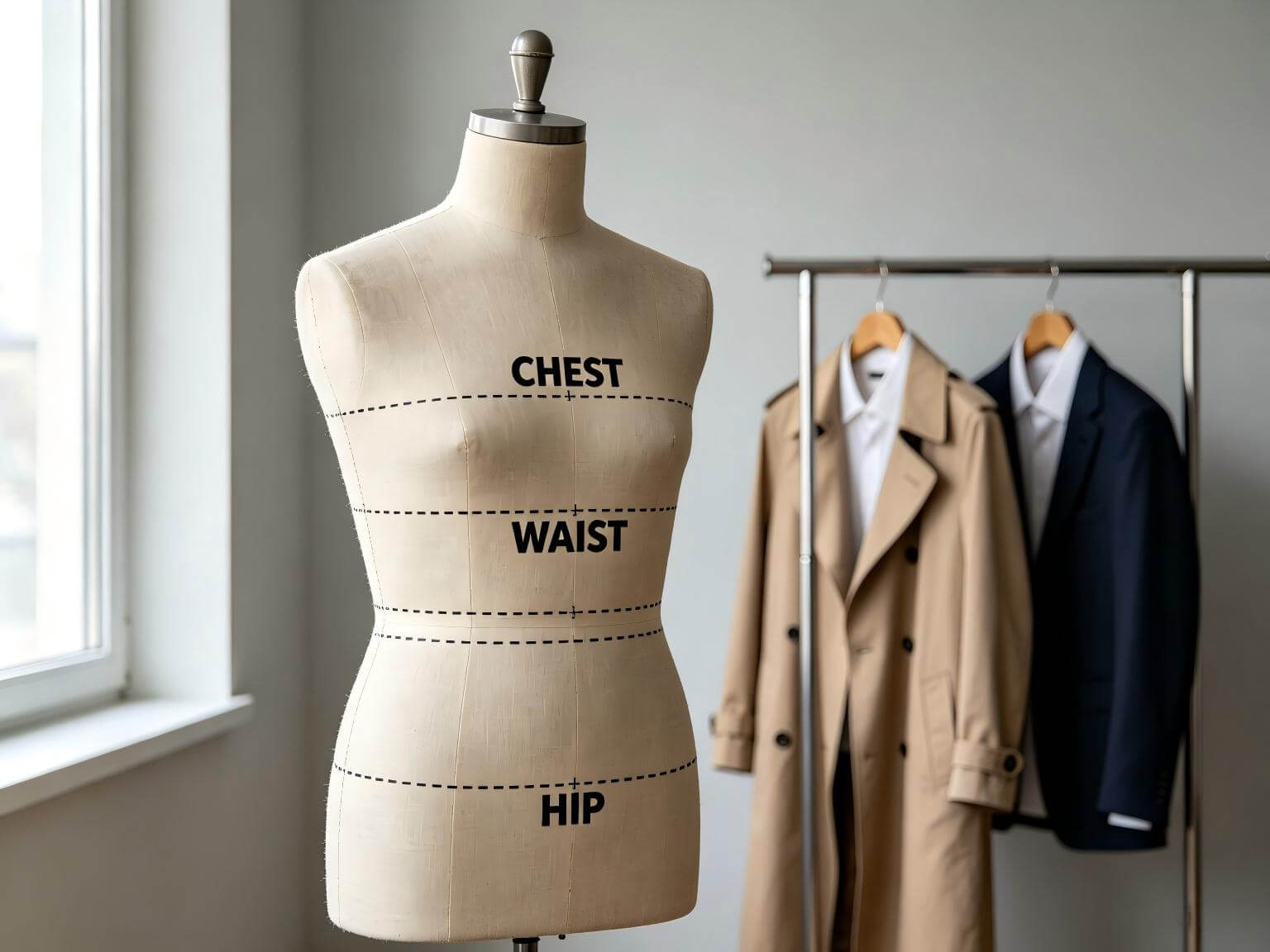
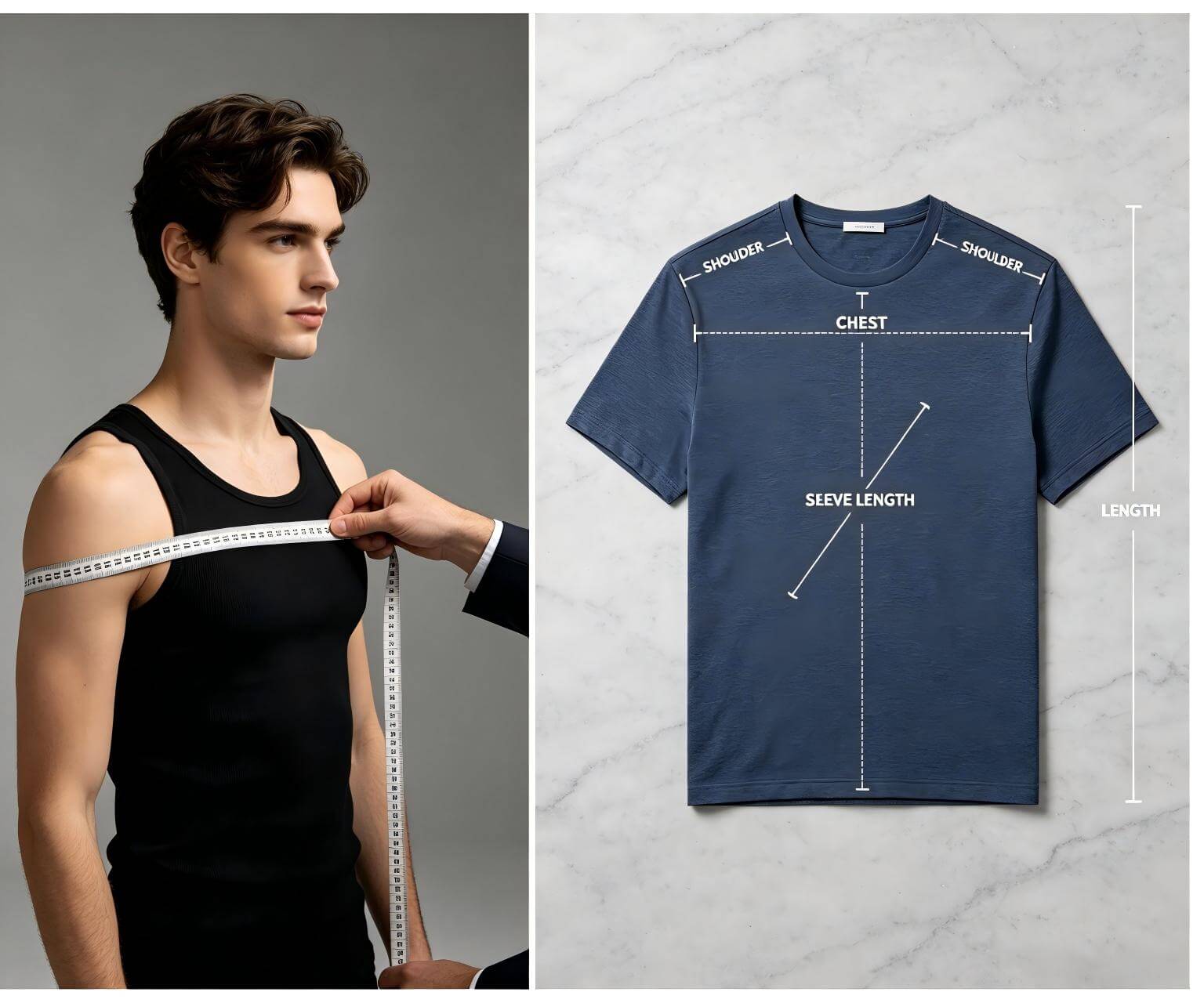
You must measure three core data points: bust, by wrapping the tape horizontally around the fullest part of the chest; waist, at the narrowest part of the torso; and hips, at the widest part of the buttocks. For pants, also check inseam, from crotch to hem, and thigh circumference.
When measuring, breathe naturally and do not suck in your stomach or puff out your chest. Once you have these numbers, compare them to the garment's flat lay size chart on the product page, rather than relying solely on S, M, or L labels.
What Mistakes Should You Avoid in Asian-US Size Conversion?
I see two most common errors.
The first is buying from memory: "I bought size L last time and it fit, so I'll order L again." But different brands, and even different styles from the same brand, can have vastly different fits. The difference between a relaxed fit and a slim fit can span one to two full sizes.
The second is ignoring fabric stretch. Whether a fabric has elasticity and how tightly it is woven directly affect how the same size fits on the body. Non-stretch fabrics require more precise circumference matching, while stretch fabrics offer more leeway.
For sourcing professionals, an especially costly mistake is unit confusion. In one documented case, a buyer sent a size chart marked "chest 40" without specifying units. The factory interpreted it as 40 centimeters, but the buyer intended 40 inches, resulting in unsellable finished goods. Whether you are purchasing personally or for business, clearly specifying measurement units and confirming mutual understanding is foundational.
What Do Real-World Asian-to-US Size Conversions Look Like?
Here are a few concrete scenarios:
A woman with a bust of 84 cm and height of 160 cm wears China's 160/84A (S) and should look at US sizes 4–6; for Korean brands, size 55 is a reasonable starting point.
A man with a chest of 96 cm and height of 175 cm wears China's 175/96A (L) and should aim for US size 40.
A Chinese M dress with a flat-lay bust of approximately 88–90 cm corresponds to US size 8.
A garment labeled Japanese size 11 (with a bust range of 94–98 cm) roughly corresponds to US 10–12.
What Information Should Garment Importers Confirm with Asian Suppliers?
For importers communicating with Asian suppliers about sizing, I recommend confirming at least four things:
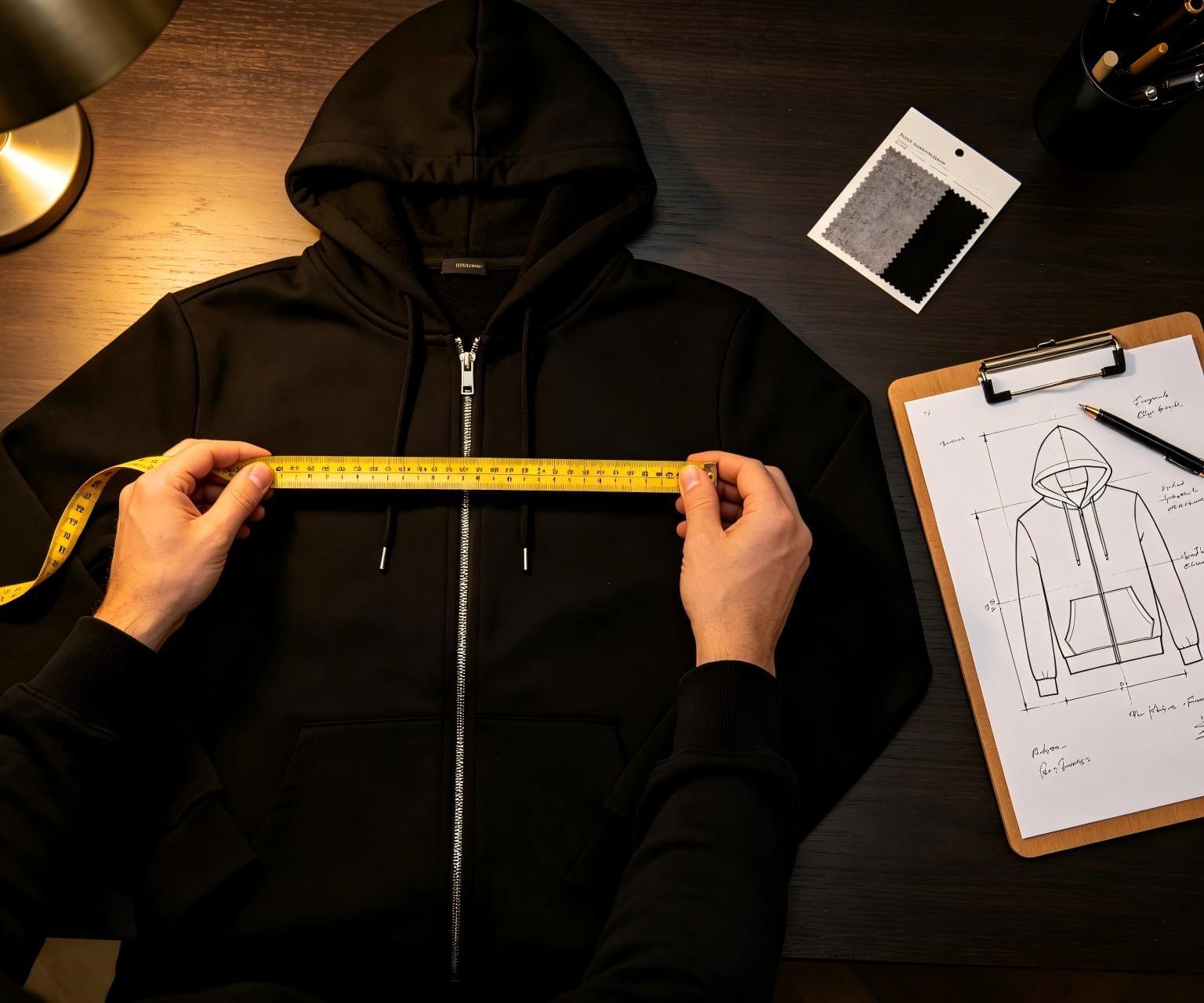
1. Actual flatlay measurements in centimeters, rather than S/M/L labels, and even specify a tolerance range (e.g., ±2 cm) in the contract.
2. Fabric elasticity and shrinkage rate, which directly affect post-wash size changes.
3. Measurement basi, whether the numbers refer to body measurements or garment flat-lay measurements, as the two typically differ by 2–4 cm.
4. A sample approval process for pre-production samples, size samples, and bulk samples should be approved before mass production. There are documented cases where buyers relied solely on a size chart, only to discover that the factory applied additional ease during size conversion, rendering the entire batch unsellable.
What Are the Most Frequently Asked Questions About Asian-US Size Conversion?
Q1: Why does the same Asian size vary so much between different brands?
Every brand has its own fit library and target customer positioning. The M size from a fast-fashion brand and a luxury designer brand can differ by an entire grade.
Q2: What does Japan's "Free Size" correspond to in US sizing?
Japanese Free Size usually falls between S and M, roughly equivalent to US XS to S, and it tends to run small for the US market.
Q3: Is Korea's "size 55" a fixed standard?
Size 55 is a historical standard. Many Korean brands no longer strictly adhere to it; relying on specific bust and waist measurements in centimeters is more reliable.
Q4: Why does the size suggested by my height and weight never fit properly?
Because height and weight only reflect overall body mass, they don't capture individual differences in bust, waist, or hip measurements. Two people of the same height and weight can have a bust of 88 cm or 96 cm, leading to completely different size choices.
What Is the Safest Way to Convert Asian Sizes to US Sizes?
The safest method is to move beyond letter labels and return to measurement-based selection. Specifically, do these three things:
1. Find a garment you already own that fits you best, lay it flat, and measure its chest, waist, and length (or inseam).
2. Locate the detailed size chart for the item you want to buy and compare point by point.
3. Prioritize the "garment flat-lay measurements" over "suggested height/weight" recommendations.
If the product page doesn't provide a detailed size chart, contact customer service to request one. In cross-border shopping and sourcing, the precision of a number is far more important than the convenience of a letter.
 Open in App